Nintendo 2DS Standard Model Marks 10th Anniversary of Japanese Launch
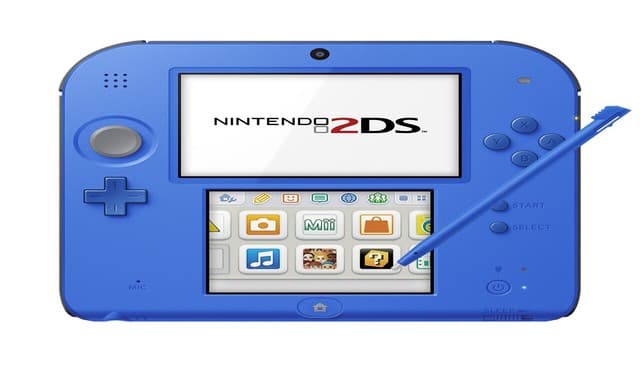

September 15, 2016 marked the day Nintendo’s 2DS standard model arrived in Japan, and as of today the handheld celebrates its tenth anniversary. The Nintendo 2DS is a portable game console positioned as a budget-friendly variant of the Nintendo 3DS, which launched on February 26, 2011. To lower its price, Nintendo removed the stereoscopic 3D display and the clamshell folding design, and switched to a monaural speaker. The result was a distinctive, colorful handheld that traded several of the 3DS’s signature features for affordability.
When rumors first suggested a Nintendo 2DS was on the way, the idea seemed hard to credit, and its official overseas announcement in August 2013 landed as a considerable shock. The device launched on October 12, 2013, but only in North America, Europe, and other overseas markets — notably not in Japan. Its colorful appearance and charming form factor proved appealing, leaving Japanese fans eager for a domestic release. That wait ultimately stretched on far longer than many observers had anticipated.

Japan finally saw the 2DS on February 27, 2016 — roughly two years and five months after the overseas launch — but only as part of a limited-edition bundle. Demand proved intense, and the limited quantity meant many fans missed out. About half a year later, during the September 1, 2016 Nintendo 3DS Direct presentation, Nintendo announced the standard model for Japan. On September 15, 2016, the standard Nintendo 2DS finally went on sale domestically, around three years after its overseas debut.

On July 13, 2017, Nintendo released the New Nintendo 2DS LL, an upgraded variant. Despite a larger screen, it was lighter than the standard model, added a C-stick plus ZL and ZR buttons, and restored the folding design. It shipped in dual-tone color schemes such as black-and-turquoise and white-and-lavender. On that same day, Nintendo announced on its official site that production of the New Nintendo 3DS had ended — a quiet milestone. For longtime owners, that announcement closed a chapter in the company’s handheld history.