Modders Unlock Doubled FP16 AI Power on RTX 20-40 Series GPUs
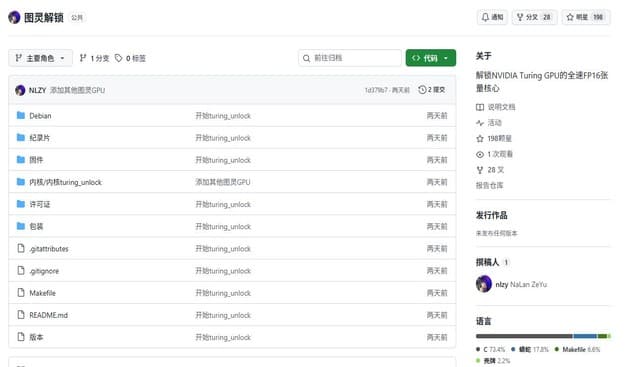

Developers in the open-source community have reportedly removed Tensor Core compute limits on NVIDIA’s RTX 20, 30 and 40 series consumer graphics cards, delivering substantial gains for specific types of AI workloads. According to reports from the community, the unlock requires no hardware replacement, no BIOS flashing and no modifications to official drivers. The news surfaced on October 26, 2026, and has drawn attention from users running local AI models on consumer-grade hardware rather than dedicated workstation accelerators.
The approach relies primarily on a Linux kernel module that modifies low-level GPU registers before the graphics driver finishes loading, which typically means the card must be fully powered down and cold-booted to activate the change. Separate open-source projects exist for the Turing, Ampere and Ada architectures. Experimental Windows solutions have also appeared online, though reports describe their stability and hardware compatibility as limited compared with the Linux route.

The published benchmark figures are notable. The RTX 4090’s FP16 throughput is listed as rising from 165.6 TFLOPS to 331.6 TFLOPS, effectively doubling. The RTX 3090 Ti reportedly gains about 80 percent in BF16 compute, while the RTX 2080 Ti and RTX 4070 Ti SUPER also show near-doubling results. The gains apply specifically to FP16 and BF16 matrix operations, so the improvements are concentrated in a narrow slice of GPU workloads rather than broad across the board.

Gaming, ray tracing and DLSS performance are unaffected, and the community notes that real-world gains for local large language models fall short of the headline benchmark numbers. The method is described as experimental, with a high barrier to entry, and it voids the official warranty. Subsequent NVIDIA driver updates are considered likely to close off the approach, and the community advises against using it on production machines or primary PCs. For enthusiasts with spare hardware, it is an interesting curiosity, but it remains firmly a tinkerer’s project rather than a practical upgrade path.