DLSS 5 Drives RTX 5090 to 613W, Melting 16-Pin Power Connector

NVIDIA’s DLSS 5 technology launched last week alongside NBA 2K27, and its 3D-guided neural rendering feature has caused significant power draw spikes across multiple RTX 50 series graphics cards. According to reports, the GeForce RTX 5090 Founders Edition draws approximately 465W with DLSS 5 disabled but can reach up to 575W when the feature is enabled — an increase of more than 100W. The RTX 5080 similarly saw a jump of roughly 100W, hitting its 360W power ceiling. These elevated power figures have renewed concerns about the safety of the 12V-2×6 power connector standard now adopted across RTX 5070 and higher models.
DLSS 5’s arrival marks a notable step up in GPU power demand. With 3D-guided neural rendering active, the RTX 5090 can pull over 100W more than its baseline operation, pushing the flagship card close to its limits, while the RTX 5080 touches its 360W ceiling with a similar increase. Industry observers have pointed out that the higher a graphics card’s power draw, the greater the likelihood of power connector overheating, and DLSS 5’s tendency to push high-end GPUs toward their power limits could further heighten risks to the power delivery system.

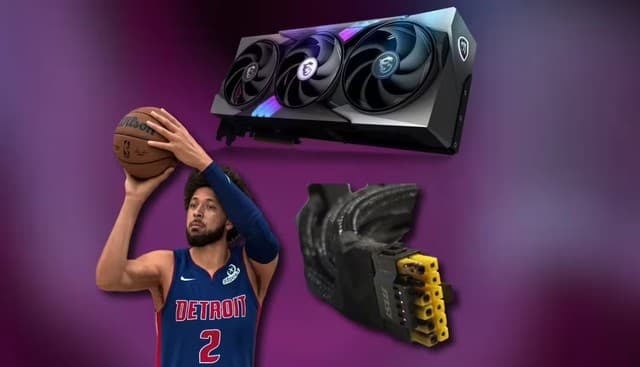
Per VideoCardz, one user testing NBA 2K27 on an MSI GeForce RTX 5090 Gaming Trio OC card encountered a connector melting incident. The user reported total board power reaching 613.5W (including PCIe slot power) with DLSS 5 enabled, and monitoring software showed the card sustaining roughly 610W before it suddenly stopped working. The user then noticed an unusual odor and discovered that the yellow MSI-branded 16-pin power connector had melted, with some material even fusing to the GPU’s power socket.
At this point, DLSS 5 cannot be definitively identified as the direct culprit behind the melted connector, but the technology does keep graphics cards running at elevated power levels for extended periods, which could be an important contributing factor. Recent years have already seen multiple cases of power cable overheating and melting — sometimes even damaging the GPU itself — on cards using the 12V-2×6 interface. This latest report serves as a reminder that high-end GPU owners should monitor power draw closely when enabling the new feature. Definitely a situation worth keeping an eye on.