9800X3D Memory Test Finds High-Frequency RAM Barely Boosts FPS
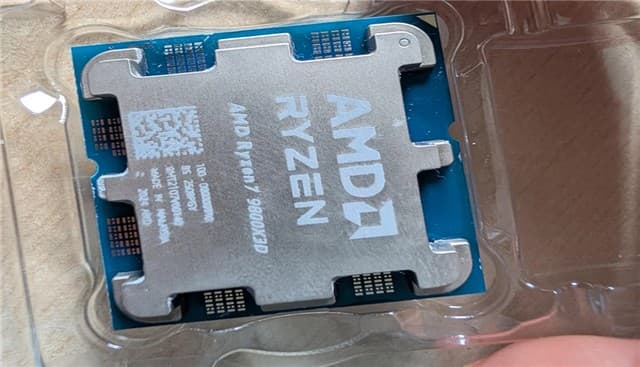

TechPowerUp has published a dedicated memory scaling test for AMD’s Ryzen 7 9800X3D, and the results may challenge a long-held assumption among PC builders. The outlet examined how different DDR5 memory kits affect gaming performance on the AM5 platform, using a test system equipped with an RTX 4090 graphics card. According to the findings, paying a premium for ultra-fast memory delivers far smaller gains than many enthusiasts might expect.
The review covered eight DDR5 memory configurations, ranging from the JEDEC standard DDR5-4800 CL40 up to an overclocked DDR5-8000 CL36. Capacities included both 16GB and 32GB kits, and the test accounted for single-stick and dual-stick setups. Eight games were then run at three resolutions — 1080p, 1440p, and 4K — to capture how memory speed scales across different rendering loads.

In most titles, the difference between the fastest and slowest memory was described as negligible. Elden Ring at 1080p showed an average frame gap of under one frame. CS2 differed by just 3.16 frames (408.73 versus 405.57), while Cyberpunk 2077 varied by 3.83 frames (242.90 versus 239.07). Even Forza Horizon 6, the most memory-sensitive game in the lineup, managed only a 6.4-frame spread (180.73 versus 174.33).

For players planning an AM5 build on a limited budget, the test sends a clear signal: moving money away from high-frequency memory and toward other components — such as a graphics card or a larger SSD — may deliver more tangible returns. The game list also included Palworld, Baldur’s Gate 3, Resident Evil 9, and Spider-Man Remastered. In this editor’s view, the data makes a stronger case for balancing a build than chasing the fastest kit on the shelf.