Witcher 1 Ending Cutscene Created Without Story Team Involvement
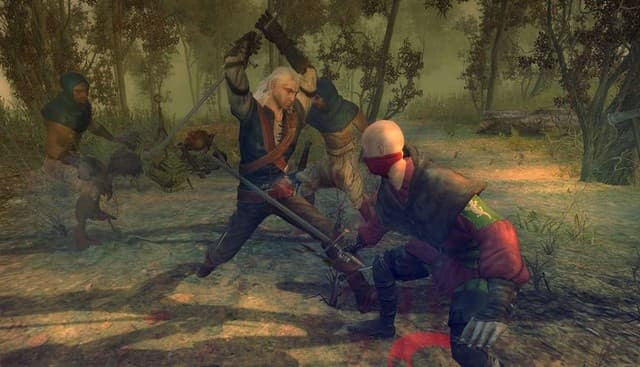

Original lead story designer Artur Ganszyniec has revealed that the final cutscene of The Witcher 1 was created without involving the narrative team, a decision that significantly impacted the direction of The Witcher 2. Ganszyniec made these revelations during his recent playthrough of the original game, which he completed for the first time in about 20 years. According to the designer, someone high up at CD Projekt Red decided the game needed an animated outro, and this decision was made without proper consultation with the story team. This revelation comes as CD Projekt Red is working on a full remake of the first Witcher game, which was announced back in 2022.
Ganszyniec explained that the story team originally intended The Witcher 1 to end with an open question and open future. However, the board or co-founder Michał Kiciński decided the game needed an animated outro. The resulting cutscene shows Geralt fighting off Foltest’s would-be assassin in Vizima, plunging the character deep into political intrigue. This ending wasn’t part of the original narrative plan and fundamentally changed the direction of the series. The cutscene established a political storyline that The Witcher 2 had to follow, shifting focus away from Geralt’s personal history and family exploration.

According to Ganszyniec, the decision to create this ending cutscene without story team involvement was a mistake. The animation told a different story than what the narrative team had planned, showing Geralt still in Vizima and involved in political conspiracy. This forced The Witcher 2 to become a very political game about Witchers killing kings, leaving little room for exploring Geralt’s personal background, family, and history. The designer noted that soon after the cutscene was created, it became evident that the next game would have to follow up on this political storyline.
The Witcher 1 remake was announced in 2022 as a full ground-up reimagining of the first game in the series. The project is being developed in Unreal Engine 5 by external studio Fool’s Theory, which has previously provided development support for RPG titles like Baldur’s Gate 3 and Divinity: Original Sin 2. No release date has been announced for the remake yet. This behind-the-scenes revelation about the original game’s development provides interesting context for both the original series and the upcoming remake, showing how executive decisions can dramatically alter a game’s narrative direction.