Windows 11 Users Hit by Widespread Trojan Warning from Microsoft Defender
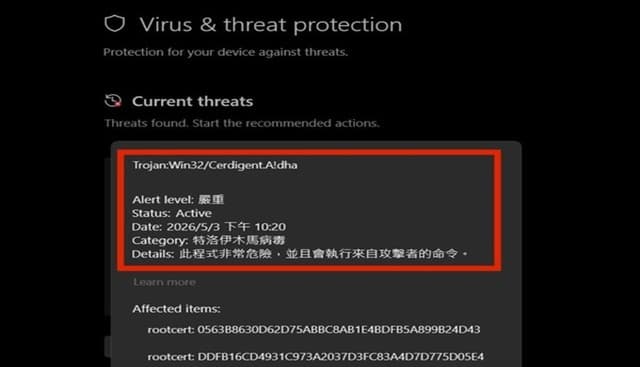

A large number of Windows 11 users have reported receiving high-risk Trojan virus warnings from Microsoft’s built-in security system, though the company has yet to confirm whether this is a genuine malware outbreak or a false positive. The alert identifies the threat as “Trojan: Win32/Cerdigent.A!dha,” a Trojan horse virus designation that has sparked heated discussion across Windows user communities. Many users are expressing confusion and concern, especially since the warning appears even on systems installed using official ISO images downloaded directly from Microsoft’s website.
According to previously published information from Microsoft, this particular Trojan type was first added to Microsoft Defender’s detection scope on April 30, 2026. The system flags it as possessing extremely high operational privileges, allowing attackers to carry out a variety of malicious actions on affected devices. Unlike typical malware targeting user files, this threat is reported to target the system’s core RootCert certificate module, making it potentially more dangerous if confirmed as a real infection.

The detected threat may lead to reduced system performance, desktop setting tampering, system crashes and slowdowns, and abnormal reductions in storage space, according to available documentation. However, Microsoft has not yet released technical details regarding the virus’s behavior or transmission methods. The lack of official clarification has left users uncertain about whether to treat the warning as a legitimate security threat or disregard it as a software error.

Notably, even Windows 11 installations performed using official ISO files from Microsoft’s website have triggered this security alert, further complicating the situation. As of now, the company has not officially confirmed whether this represents a real large-scale Trojan infection or a widespread system misreport. Given this ambiguity, users encountering this warning are advised not to rush into cleaning files or reinstalling their systems. Caution and patience may be the wisest approach until Microsoft issues a definitive statement on the matter.