ZOWIE x VCT CN: Inside the Making of Official Tournament PCs
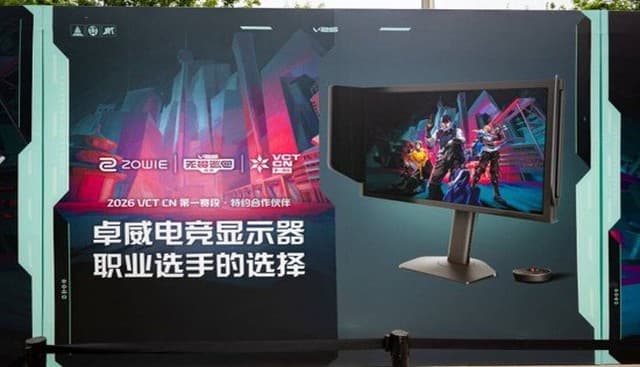

More than two weeks after the conclusion of the 2026 VCT CN Stage 1, highlight reels of pro players continue to circulate across gaming communities. While individual skill and countless hours of practice are behind every impressive play, the consistency and reliability of tournament-grade hardware are equally critical to maintaining a fair competitive environment. At this transitional moment between the end of Stage 1 and the upcoming Masters in London, ZOWIE — a long-term partner of VCT CN — sat down with Sherry, a tournament technical engineer for the league, to break down how official competition PCs are selected, calibrated, and maintained.
Sherry’s responsibilities as a technical engineer cover all stage-related technical environments at events, including hardware such as PCs, monitors, and peripherals, as well as software environments like system images, game clients, and drivers. During the preparation phase, the team conducts internal performance tests and cross-comparisons between different candidate products to determine which equipment to use. “We also incorporate feedback from pro players’ daily usage habits, gather input from clubs, and communicate with the game team to gather more reference information,” Sherry explained. Before each tournament begins, all participating players attend a mandatory Tech Check session where they can test the actual stage equipment, provide feedback, and record their personal settings.

Sherry described Valorant pro players as a group of “special users,” emphasizing that their experience is the core benchmark for tournament PC selection. “For monitors specifically, ultimate display smoothness, low latency, high refresh rate, and stability are the most critical selection criteria,” she noted, with smoothness being the top priority. The team coordinates with players to choose monitor sizes and resolutions that match their daily training parameters, minimizing adaptation time on the competition stage. Display quality is evaluated across multiple dimensions including ghosting, character clarity, dark area performance, and screen tearing. Most players currently favor 1920×1080 resolution or lower, sometimes using 4:3 or 16:10 aspect ratios to suit their aiming and movement preferences.

Rather than fixing issues on match day, the technical team prioritizes preventive measures. “We prepare a sufficient number of backup machines to handle unexpected situations, followed by post-event technical inspections and repairs,” Sherry stated. The selection standards prioritize player experience through multi-party, multi-dimensional evaluation, working in tandem with brand teams that align with the region’s technical goals. The result is a more polished viewing experience for audiences. Looking ahead, ZOWIE has confirmed it will continue its partnership with VCT CN, supporting players in future tournaments. Stage 2 is on the horizon. This behind-the-scenes look reveals just how much precision goes into making every frame count at the highest level of competition.