Riot Games Employee Fired After Sharing AI Proposal, Offered $15K
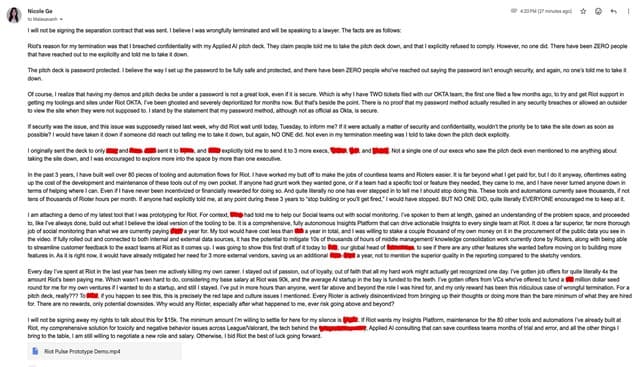

A controversial termination case involving Riot Games has surfaced online, raising questions about corporate transparency and employee rights. Former employee Nicole Ge, who worked at the League of Legends developer for three years, claims she was fired after sharing an artificial intelligence proposal with company executives. The situation has gained attention across gaming communities as details of the termination and subsequent settlement offer have been made public. According to Ge’s account, the incident centers on her initiative to improve company operations through AI technology, which ultimately led to her dismissal under disputed circumstances.
Nicole Ge stated that she created a comprehensive proposal detailing how Riot Games could better utilize artificial intelligence to combat toxic behavior and optimize customer feedback processing. She stored this presentation on a password-protected website before sharing it with select company executives. The proposal represented her professional assessment of potential improvements to Riot’s operational systems. However, rather than receiving recognition for her initiative, Ge found herself facing termination shortly after the executives reviewed her work.

Riot Games management allegedly accused Ge of violating the company’s confidentiality agreement, leading to what she described as a “merciless” termination. In her detailed online post, Ge questioned the validity of these claims, noting there was no evidence that anyone outside Riot Games had accessed her proposal. She emphasized that multiple executives, including the company’s CEO, had willingly reviewed the document and expressed no concerns about its distribution. No one requested that she remove the presentation from the protected site prior to her dismissal.
According to Ge’s account, Riot Games offered her $15,000 (~¥108,000) to remain silent about the termination, an offer she reportedly refused. The former employee has decided against pursuing legal action against her former employer, instead choosing to focus on starting her own company. This case highlights the complex dynamics between employee innovation initiatives and corporate confidentiality policies within major gaming companies. While the full details remain contested, the situation serves as a reminder of how internal proposals can sometimes lead to unexpected professional consequences in the competitive gaming industry.