Stranger Than Heaven: RGG Studio Reveals Combat and Art Details
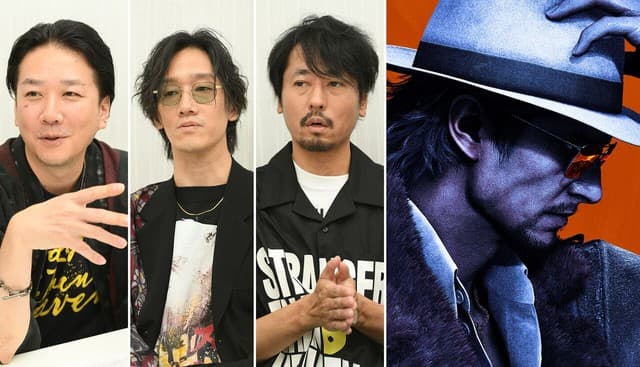

Tokyo Game Show 2026 ran at Makuhari Messe from September 19 to 20, with September 21 cancelled, and RGG Studio brought its new title Stranger Than Heaven to the Sega and Atlus booth in Hall 4-N01. The exhibit featured an early playable demo, giveaways such as fans and neck straps, music footage including unreleased songs, and a walkthrough museum built around the game’s five eras. As the public days opened, producer Hiroyuki Sakamoto, chief director Ryosuke Horii, and art director Daishi Kanaya discussed the demo’s combat, the town visuals, and the design of protagonist Daito Shin.
According to the developers, the Tokyo Game Show demo was tuned closer to the final product, with enemy health adjusted so that weaker foes feel satisfying to defeat while tougher enemies stay tense. Horii explained that guarding matters more here than in the Yakuza series. Players use one button for a basic guard and shoulder buttons to block from the left or right, and timing a block to an incoming attack triggers a just-guard window that stops depleting spirit. Spirit is one of two core battle parameters, and losing it causes a downed state. Attacks can be combined for custom combos, and charged heavy hits can break an opponent’s guard.

Art director Daishi Kanaya said the visual direction grew from historical research rather than direct recreation of reality. After a reference image that had taken on strong colors was shown to RGG Studio representative Masayoshi Yokoyama, he responded positively, prompting research into old Western paintings. Because painters of that era worked with a limited range of colors, the team built the Ogura town visual around a restricted palette. Each era then uses an entirely different set of colors to emphasize the passage of time. For protagonist Daito Shin, who is half Japanese and half American, the team gathered feedback from Sega’s American studio and foreign staff, and his costumes shift with each era.

The story follows Daito Shin from the early 1900s to 1965, moving forward in roughly fifteen-year jumps across the pre-war, wartime, and post-war periods. Kanaya noted that the changing towns, fashions, and social values are central to conveying this shift, and the developers described the project as an experience of living one person’s life rather than simply following a plot. The team also confirmed the soundtrack is its largest to date, using period-appropriate instruments and several music-themed scenes. Stranger Than Heaven deliberately runs against the flashy, hyper-responsive trend in action games, and that bold choice makes it one worth watching.