Pokemon Battle System: How Game Freak Handles 1000+ Species

At CEDEC 2026, held from July 22 to 24, Game Freak developers Hayashi Munakata and Toshihiro Obata detailed the architectural philosophy behind the Pokemon battle system. The series now includes over 1,000 Pokemon species, 900 moves, 300 abilities, and 200 items — all interacting in increasingly complex ways. The developers recognized that adding new content generation by generation was no longer sustainable. After completing a previous title, the dedicated Pokemon Battle System Team was formed to completely rebuild the system from scratch, focusing on four key principles: structuring, extensibility, flexibility, and maintainability.
The team’s first priority was structuring the game logic into clearly defined, reusable units. They separated the “game logic” framework — which determines processing order — from “individual specifications” — unique effects from moves, abilities, and items. The smallest logic unit was named a “section.” For example, damage processing was divided into “damage calculation” and “HP reduction” sections, with calculation further broken into attack power, defense power, and damage determination. This hierarchy ensured consistent implementation across different developers and prevented code bloat as new generations added more content.

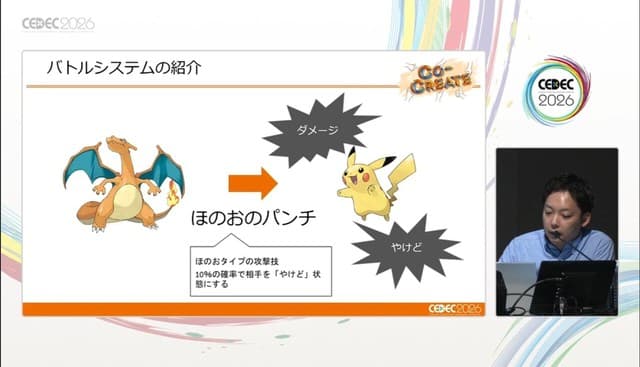
To enable adding new content without modifying existing code, the team introduced an event and event handler system. Events are triggered from logic sections, serving as hook points where individual specifications can intervene. A Fire Punch example illustrated this: an attack power correction event fires, Sunny weather handlers boost it, then Pikachu’s Static ability triggers paralysis as an interrupt, and a Cheri Berry cures it. Event handlers can recursively call sections, handling complex interaction chains cleanly. Individual specifications can also be easily removed by simply not registering their handlers, preventing feature creep.

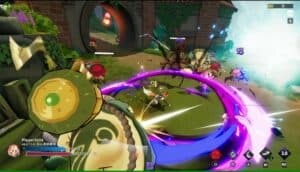
Surprisingly, Pokemon Legends Z-A runs on the same core logic despite featuring real-time action combat instead of turn-based battles. Sections like “action execution” were omitted for being too granular, while “accuracy check” was replaced with collision detection. However, “activation check” and “damage application” were carried over directly. The move Protect demonstrates this flexibility: in turn-based battles it prevents move activation, but in real-time combat its event handler was switched to zero out damage instead — with no core logic changes required. This engineering feat proves the system’s remarkable adaptability, and with such a flexible foundation, the possibilities for future gameplay innovations look truly promising.