Overwatch Devs Respond to New Hero Sijun’s Design Controversy
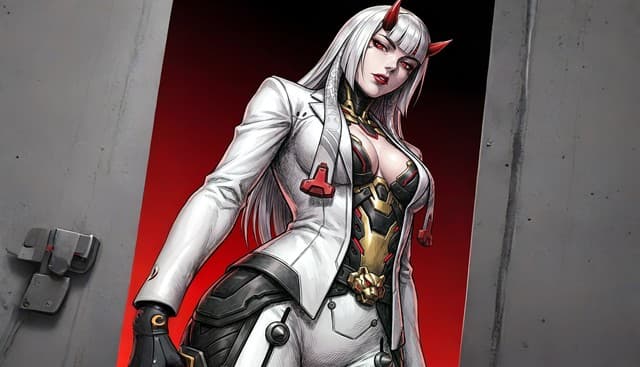

Overwatch has introduced its latest hero Sijun with the launch of Season 3, titled Dragon’s Den, marking the game’s first female robotic character. As the most feared elder of the Hashimoto clan, Sijun boasts exceptional mobility and devastating firepower. Almost immediately after her reveal, some players raised concerns that her alluring appearance was designed to appeal to specific audiences. This prompted an official response from the development team, who addressed the controversy directly in a recent interview.
Senior producer Kenny Hudson and narrative designer Milana Moyer emphasized in an interview with GameSpot that Sijun is far more than a superficial character. Her preference for uniforms and motorcycles reflects her struggle to play the role of a “human” in a world dominated by humans. Season 3’s theme revolves around “finding one’s true self under the weight of others’ expectations,” and Sijun’s story demonstrates just how far one can go to achieve that. Moyer revealed that behind her authoritarian appearance lies a “heavy past” and deep emotional trauma, details that will be gradually uncovered in future content.

The development team drew inspiration from 1990s cyberpunk animation and action films such as Kill Bill and John Wick. Lucy Liu’s character O-Ren Ishii served as the direct prototype for Sijun’s personality — a formidable leader burdened by old grudges who commands absolute authority. On the technical side, implementing Sijun’s motorcycle mechanics proved challenging. Hudson stated that the team wrote entirely new code for dynamic collision volumes after playtesting revealed that Sijun became nearly invincible while riding, due to a compressed hitbox that made her difficult to hit.

Season 3 Dragon’s Den is now available, allowing players to witness firsthand the fated clash between the Hashimoto clan leader and existing heroes Genji, Hanzo, and Kiriko. The developers view Sijun not just as a new hero but as a significant signal of Overwatch’s narrative evolution — where style and appearance are being used as tools to explore darker, more complex storytelling. This is a bold direction for the series, and one worth paying close attention to as the season unfolds.