How Mods Like Team Fortress and Counter-Strike Transformed Gaming
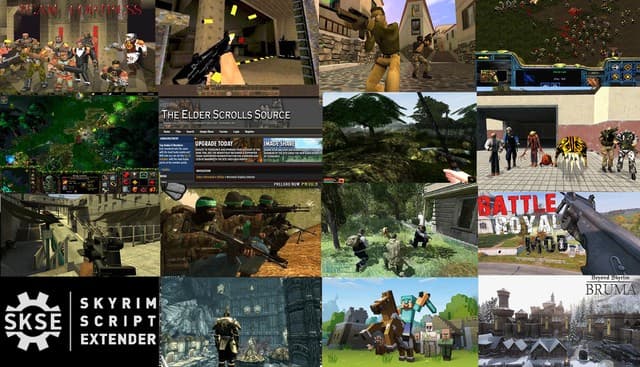

The gaming industry has been profoundly shaped by player-created modifications, with some of the most influential titles starting as simple mods. Over nearly 30 years of 3D gaming history, high-quality mods have not only revitalized game communities but also spawned entirely new games, changed developer careers, and transformed the industry landscape. This phenomenon traces back to 1996 when id Software released Quake, the first true 3D game, which featured powerful modding tools that enabled creative players to add new weapons, maps, and gameplay modes.
The Team Fortress story began in 1996 when three Australian modders—Robin Walker, John Cook, and Ian Caughley—created the initial ‘Quake: Team Fortress’ mod just two months after Quake’s release. Their innovative class-based system and team-focused gameplay quickly attracted a dedicated following. As the mod evolved through updates and improvements using the QuakeWorld multiplayer engine, it caught the attention of Valve Corporation, which was then developing Half-Life. In March 1998, Valve invited Walker and Cook to discuss incorporating Team Fortress into Half-Life’s multiplayer. Valve soon purchased the mod’s rights and established a dedicated Team Fortress development team. The mod eventually became Team Fortress 1.5 in 1999, evolved into a standalone game in 2003, and culminated in Team Fortress 2’s 2007 release, which remains highly active today.

Another legendary mod emerged from the Quake community when Minh ‘Gooseman’ Le created ‘Quake: Navy SEALs’ during his university years. Inspired by Rainbow Six, Le later developed the concept that would become Counter-Strike using Half-Life’s more accessible modding tools. The Counter-Strike project announced in April 1999 attracted thousands of visitors to its website within weeks. The initial Beta 1.0 release in July 1999 featured hostage rescue mode with nine weapons, four maps, and two character models. As the mod matured with the addition of bomb defusal mode in Beta 4.0, its popularity surged dramatically. By late 1999, Valve recognized the commercial potential and began collaborating with the mod team, eventually acquiring Counter-Strike’s rights in 2000 and hiring Le and Jess Cliffe. After extensive testing, Counter-Strike 1.6 launched as a standalone game in September 2003.

These mod-to-game transformations established foundational frameworks for entire gaming subgenres. Team Fortress essentially defined the ‘hero shooter’ category that later influenced titles like Overwatch and Marvel Rivals, while also shaping design philosophies for games such as Apex Legends and VALORANT. Counter-Strike evolved into Counter-Strike: Global Offensive, which remains one of the world’s most popular multiplayer FPS titles with a massive esports following. The journeys of these mods demonstrate how player creativity can fundamentally reshape gaming landscapes. While modern development pipelines have changed, the legacy of these community-driven innovations continues to inspire new generations of game creators and modders alike.