Card Immortal Sect Review: Card Stacking Meets Cultivation RPG
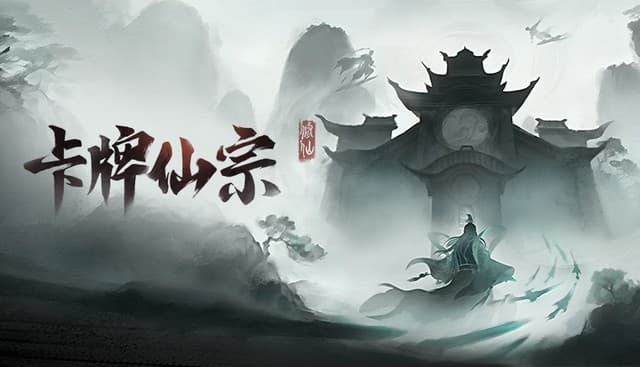

Drawing inspiration from the card-stacking mechanics of Stacklands, the new Chinese indie title Card Immortal Sect (卡牌仙宗) brings a distinct cultivation sect-building twist to the genre. Players assume the role of a fallen sect founder reduced to the lowest Qi Refining realm, tasked with rebuilding a mighty immortal sect from scratch using nothing but cards. Everything from disciples and cultivation techniques to spirit fields and mineral deposits is represented as collectible cards that players stack and combine to generate resources, recruit followers, and expand their influence. The game aims to let players master celestial laws through strategic card placement, offering a uniquely Eastern take on the deck-building simulation formula.
Core gameplay revolves around stacking cards to create new items and abilities, following the Stacklands model but with significantly expanded scope. Players manage three parallel systems — sect construction, resource gathering, and disciple cultivation — all interconnected through a resource cycle. Spirit field and mineral cards produce basic resources, while disciple cards can train to unlock advanced skills. Random encounters and secret realm exploration yield rare materials that drive progression. Unlike simpler stacking games, this title deeply weaves its cultivation theme into every card interaction, making each stack feel like a step toward immortality.

The game’s rhythm is described as “tight early, looser later,” with compact in-game years demanding rapid resource accumulation and planning. Once a functional card engine is established, the pace becomes more rewarding, occasionally allowing players to punch above their weight. A full playthrough from Foundation Establishment to Deity Transformation can span over ten hours, with random events adding variability. However, the three parallel systems require constant manual attention — resource output, sect management, and disciple training must all be balanced simultaneously, creating a high-information-density experience that the reviewer describes as quite hectic.

Despite its ambitious design, the game carries several notable flaws. A restrictive card limit forces frequent manual reorganization, disrupting the flow of development. The large unbounded playing area requires tedious card dragging. Other issues include unclear item recipes, a display bug with untranslated file names persisting two weeks after launch, and mandatory online connection with anti-cheat measures that add unnecessary restrictions. The game overall reads like a promising first draft — its core concept shows clear potential, but the lack of polish in execution holds it back from reaching its full aspirations as a cultivation simulation experience.