Capcom Takes Strict Action Against Resident Evil Mod Creator Over Content
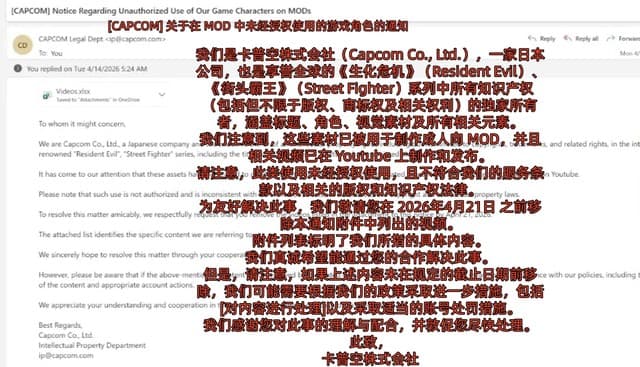

Capcom has recently taken aggressive legal action against mod content creators, targeting a popular content creator known as GrizzoUK. The YouTuber, who boasts 216,000 subscribers, received copyright takedown notices from Capcom for publishing videos featuring “SEX” costume modifications for the Resident Evil series. This represents one of the most significant crackdowns by a major publisher on user-generated mod content in recent memory, raising important questions about the boundaries between copyright protection and creative freedom in gaming communities.
The copyright notice demanded the removal of over 1,000 videos from GrizzoUK’s channel, including content featuring games not owned by Capcom such as Stellar Blade. According to reports, the video platform temporarily banned the entire channel by mistake during this process. Faced with the threat of permanent channel termination, the creator has publicly announced he will cease production of all Resident Evil-related mod content moving forward. This action specifically targeted modifications that altered character costumes in ways that Capcom deemed inappropriate for their intellectual property.

The enforcement has sparked intense discussion within gaming communities worldwide. Many are questioning whether Capcom’s actions represent legitimate intellectual property protection or excessive suppression of the modding community. Observers note that while other game publishers have generally adopted more permissive approaches to user-generated content, Capcom’s response appears particularly severe. The incident highlights the ongoing tension between corporate copyright enforcement and the creative freedoms traditionally enjoyed by modding communities across various gaming platforms.

The situation presents a complex challenge for both publishers and creators. On one hand, companies have legitimate rights to protect their intellectual property from unauthorized modifications, especially those that could damage brand reputation. On the other hand, modding communities have historically contributed significantly to game longevity and player engagement. While Capcom’s legal position may be technically sound, the severity of their response—targeting over 1,000 videos including non-Capcom content—suggests a broader policy shift that could have chilling effects on creative expression within gaming communities. This case will likely influence how other publishers approach mod content in the future.